Join us for debate at our Facebook Group, Liberty Cafe!


Showing posts with label law. Show all posts

Wednesday, June 30, 2010

With All The Rumors, This Makes Sense...

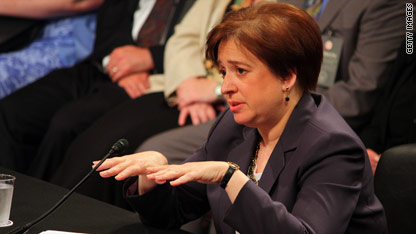
Taken from CNN profile "What we've learned about Elena Kagan":


Apparently, aside from anti-military and pro-aborition stances, she also does a mean air piano. Her specialty? Rocketman!


Followed by We Didn't Start the Fire!

Saturday, May 8, 2010

Is Nationality Racist?

I don't know the context of the detention and beating of this Hispanic man in Seattle, so I won't pass judgment, but what did catch my eye was this:
A Seattle police officer offered a tearful apology after being caught on camera kicking an innocent man and using a racial epithet.

The video shows a group of officers standing around three men who are lying on the ground. Seattle Police Detective Shandy Cobane shouts, "I'm going to beat the [expletive] Mexican [expletive] out of you homey! You feel me?"
So what's the racial part? "Mexican"? That's a nationality. "Homey"? That's usually attributed to "black culture" and is also used as a label for both friend and foe. An interloper in MS-13 territory could be called "homey" for intimidation.

Is the definition of racism becoming so diluted that mentioning a nationality associated with Hispanics is now banned? So he called him a Mexican. If he called him by his proper nationality (whatever that may be, the guy could actually be of Mexican ancestry), would it be okay in the eyes of the race classifiers and officer haters?

Probably not.

***

For the record, innocent or guilty, rightly or wrongly detained, if the man resisted the police physically he brought it on himself. You simply do not, at any time, physically resist law enforcement. You comply and you let their superiors, your lawyer and the courts handle the lawful or unlawfulness of your detention. Being a big gangsta man or whatever your fantasy icon will only get you beaten or tased, and it will be totally justified.

If it was unjustified, if he was beaten for no reason at all, those involved should be punished severely. No mercy for those who abuse the power they are entrusted with as police officers.

Sunday, April 25, 2010

The Law Prof on Arizona's New Law

Reason strikes again!
Nothing in the law authorizes stopping people because of their skin color. The law simply provides guidelines as to what is permissible in accordance with federal law, and the procedures that should be used.

Could the law be abused? Sure, so can any law.

Claims of "driving while black" and other racial profiling have abounded for decades. But we don't eliminate the enforcement of traffic laws just because some police racially profile; instead we educate and discipline police who use racially neutral traffic laws for racial purposes. Why should the immigration laws be any different?

If you want to argue that the law is not sound on civil liberties grounds, do so. If you want to argue that as a matter of public policy local governments should not enforce the immigration laws, then make that argument.

But the one argument which is not legitimate is that the law is racist. Because it is not.

Thursday, April 8, 2010

Selective Justice

A few days ago, Wikileaks, the site dedicated to exposing secrets, let loose a video showing the deaths of two journalists in Iraq 2007. The video, named “Collateral Murder”, starts with several minutes of text fluffing the situation for the reader. When the video actually starts, the casual watcher has already been told what happens is a crime, so when the event does happen the shock and indignation has been already planted. The viewer isn't looking for weapons, suspicious behavior or even reading the context of the comment made by the soldier. All that has already been dismissed by Wikileaks, who rather you notice that the American military is evil for shooting journalists and kids and little bunnies. So very, very evil.

Alas, if you are a viewer who likes knowing the truth rather than tow a narrative, you'd notice that several men in the group are carrying weapons. You'd also notice that one of those weapons is an RPG (Russian: “ruchnoy protivotankoviy granatomyot”), not something a security detail carries. The streets are empty indicating a battle is in progress or nearby. The video itself, from an Apache helicopter, is extra proof that the situation in the area required air cover. Then there's the after action report (emphasis mine):
We remained above the engagement site while Bushmaster sent ground forces to the site. Bushmaster arrived and reported 11 x AIF KIA and found RPGs and RPG rounds at the site. We also witnessed a loaded RPG lying 2-3 blocks south of the engagement site. Bushmaster reported that the first child was wounded and pulled from the van. We were unable to determine that there were children in the vehicle and never saw any children prior to or during the engagement. After viewing the gun tape, were able to determine that both wounded children came from the van. Bushmaster immediately MEDEVAC'd both girls to FOB Loyalty for medical care.
All this points to that group of men being armed insurgents, not innocent civilians as Wikileaks wants you to think. The journalists were embedded with the enemy, without the knowledge of the military, and there was little to no way that the Apache gunner or his commanding officer who authorized the strike could of known. If the journalists hanging with the insurgents didn't want to be shot, they should of marked themselves as such with a giant “TV” taped to their vests, helmets or clothing. The same goes for the van that flew in to aid the fallen insurgents. If you want to go help folk in a war zone, you need to mark yourself as such, even if you're an insurgent sympathizer. A giant cross or crescent on your roof, or the word medical or doctor, would give the soldiers reason to hold fire. Yet, that wasn't on the van, so there was no reason to believe that the van was civilian, nor was there anyway to know the man who drove the van in had his kids in it.

The reaction of the left to this has been bloodthirsty. Condemnation as murders, trigger happy, blood crazed racists and so on. A field day on the military based on a pre-written script as instigated by Wikileaks and the left's narrative of the American military.

Now, compare this to the most recent person to be elevated to hero status on the left: Constance McMillian. The Mississippi student, a lesbian, was denied entry to her prom because of her desire to dress in a tux and because she wanted to bring her girlfriend along. The school, in my opinion, acted like a group of little vindictive school girls trying to ostricise an unwanted. The story rightly made news and the school is rightly being lambasted for its childish ways.

I have no qualms with homosexuality. I'm no expert on social justice theory or conservative social tradition or any other social things. It's not something I like to argue about. But, I cannot fathom the moral corruption of those who think Constance is the shining new hero of America while also condemning soldiers as murderers for doing the right thing. They'll support the ruling that makes prom protected under the First Amendment ("The court finds this expression and communication of her viewpoint is the type of speech that falls squarely within the purview of the First Amendment."), but they won't lift a intellectual or rhetorical finger to support those who defend that right. They won't admit that the ruling, accurate or inaccurate, says she was making a political point at a school function, but they will admit that American soldiers like the Apache crew are wrong, so wrong, for firing on armed insurgents in a war zone.

This is selective justice beyond a doubt. Constance was mistreated by the school and is being given the benefit of the doubt, as well as justice. The military was wronged by Wikileaks's bias and its vendetta, yet it is not being given any benefits whatsoever by the left. It's being given two barrels right to face with every know-nothing comment by bloggers and TV pundits despite the evidence disproving Wikileak's narrative.

Justice is for all persons not just those who fit the political agenda. Justice is for all, otherwise its just political and moral corruption.

Wednesday, March 31, 2010

ACLU Exposes CIA Agents, Left Silent

Remember when a Democratic hack exposed the identity of a CIA agent? Bush and Rove got blamed.

Where's the outcry now?
A team of CIA counterintelligence officials recently visited the U.S. military prison at Guantanamo Bay, Cuba, and concluded that CIA interrogators face the risk of exposure to al Qaeda through inmates' contacts with defense attorneys, according to U.S. officials.

The agency's "tiger team" of security specialists was dispatched as part of an ongoing investigation conducted jointly with the Justice Department into a program backed by the American Civil Liberties Union. The program, called the John Adams Project, has photographed covert CIA interrogators and shown the pictures to some of the five senior al Qaeda terrorists held there in an effort to identify them further.

Details of the review could not be learned. However, the CIA team came away from the review, conducted the week of March 14, "very concerned" that agency personnel have been put in danger by military rules allowing interaction between the five inmates and defense attorneys, according to an intelligence source close to the review.

The team also expressed concerns about the inmates' access to laptop computers in the past. Some of the inmates who are representing themselves in legal proceedings were granted laptop computers without Internet access. However, the officials fear that future unfavorable court rulings could provide the inmates with the capability of communicating outside the island prison.
Lawfare at its best.

Monday, March 29, 2010

A Quick Snark Attack Upon JB of Balkinization

I follow the blog Balkinization mostly for kicks, since its run by far-leftist who want to see the Constitution reformed to fit their majority rules, minority be crushed agenda. This night, I shall snark at them with vigor.
The victory of President Obama and the Democrats in passing historic health care legislation has changed the political climate in Washington.

What has not changed is the basic structural problem that American government faces. It is a problem for the Democrats today. It will be a problem for the Republicans in the future if nothing is done about it.

The problem is the Senate.
If he's talking about the popular election of Senators, something that was only changed 100 years ago and not part the original plan of the Founders, then it is a problem. Before the Progressive movement got the popular election of senators passed, the state governments were able to send their own representatives, the senators, to Congress to balanced out the populism from the House. But that's not what he's talking about.
No matter how great last weeks' victory, the Democrats still need 60 votes in the Senate to pass major new legislative initiatives. They will get little cooperation from the Republicans. We now have the equivalent of parliamentary style parties-- featuring strong party discipline by the party out of power-- in a system that is not a parliamentary democracy.

This combination is unsustainable.

The Senate got to 60 votes on health care in December. That is what made possible the use of House passage plus reconciliation in March.

But that 60 vote majority is now gone. Very soon Americans will figure out that the President and his party can achieve almost nothing. And at that point the President's recently gained aura as a winner who can do great things will dissipate.
Not being able to force an agenda on the entire country by pure 50 plus 1 majority is what he's talking about.
The country needs to do a great deal more to deal with the economic crisis. There must be new financial regulations. Legislation to promote economic growth and job creation. And there are also important energy and environmental initiatives.
Dear reader, I trust you can you guess which one of his worries cannot live if the other two are enacted. JB couldn't see it, probably out of ignorance.
For each of these measures, the President will need 60 votes in the Senate.

The opposition party has given notice that it will not cooperation with the President and his party on anything. The Republicans will resist not only legislative initiatives, but also basic appointments to the Executive branch, as well as judicial appointments. There may be a few exceptions like the recent jobs bill, and we might possibly see minor reforms on financial regulation, but in the months leading up to the 2010 and 2012 elections, it is likely that the Republicans will double down on their policy of virtually complete intransigence.

And things will only get worse after 2010. The Democrats will have even fewer seats in the Senate because of the off year election, when the President's party usually loses seats. Given the state of the economy, it will probably lose more seats than usual. The Democrats are very unlikely to get back to 60 seats in the near future. They are still likely to have majorities in both houses. But those majorities will prove next to useless without 60 votes in the Senate.

The President and his advisers are well aware of these facts. They recognize that the glow of victory on health care will soon give way to the harsh reality that the President and his party may not be able to get anything else done of significance if they cannot do something about the Senate.

That is why the next big task the Administration must take on for itself is the reform of the Senate rules.
i.e. Making it easier to pass horrible legislation and appoint radicals in spite of the forced collaboration that the Founders had in mind. Totally okay, since the ruling party is in his ideological pool.
The President must get the Democrats in the Senate to do what they were unwilling to do in 2004 and 2005 when the Republicans were in control: reform the filibuster rules and the rules on holds.

If the Republicans are correct that the logical strategy is noncooperation, the Democrats will adopt it the next time that the Republicans gain the White House. Neither party is likely to get to 60 votes in the Senate very often, which means that without reform of Senate rules, it will be very hard for Congress to pass any important legislation in the future. The minority party, whether Republican or Democratic, will use the Senate to prevent reform in any direction, whether liberal or conservative. Congress will continue to vote appropriations to keep the government running, and will be able to make very minor adjustments. But if the President cannot persuade the Senate to reform itself, health care may be the last big reform measure passed by either party for some time.

American government cannot operate like this, especially given the many problems we face.

The Senate must be reformed.
It's nice to see he mentions that Republicans will have problems, too. But guess what? JB... that's the damn point! Unless there is a landslide election of a party, the parties must be FORCED to work together as they did for national security after 9/11 and for the horrible, but bipartisan Medicare Part D. Just because you fear that each election won't give a hardy majority to either party don't mean you can just wave your No.2 pencil and declare that they VERY NATURE of the Senate is wrong.

By the very nature of human nature, the government will always seek power. Each branch trying to overcome and rule the other. Obstructionism in the Senate prevents the House from doing some really stupid ass stuff. One of the reasons that Congress is so bad now because there isn't enough obstructionism in the Senate. The House and Senate work together way too often. If the states could elect their own senators, do you think any of them would of voted for a health care bill that tanks most of their budgets? Hell no.

If JB's changes went through, I bet you he'd be crying bloody murder when the Republicans start hammering through their agenda.

"No, no. It was never meant for that! It wasn't meant for real change!"

UPDATE: Ezra Klein makes the same case. End protections. Enforce majority rule.

Friday, July 17, 2009

The Charter: Making Canada's Criminals Safer since 1982

The Supreme Court of Canada on Friday threw out a drug conviction linked to a cocaine seizure worth up to $4 million because the police search "flagrantly" breached the suspect's Charter protections.

The high court ruled 6-1 to acquit Bradley Harrison of all charges.

It was one of four judgments handed down Friday that clarify legal limits for judges and police when it comes to evidence obtained through detention or searches that cross the Charter line.

[...]

"It is true that the public interest in having the case adjudicated on its merits favours the admission of the evidence, particularly in light of its reliability," McLachlin acknowledged.

"On the other hand, the impact on the accused's rights, while not egregious, was significant. Bulking even larger, however, was the police misconduct involved in obtaining the evidence. This was far from a technical or trivial breach."

Rather, it involved "brazen and flagrant" disregard of Harrison's rights against arbitrary detention and unreasonable search and seizure, she said, quoting the trial judge.

[...]

On Oct. 24, 2004, the Ontario Provincial Police officer stopped the Dodge Durango near Kirkland Lake, Ont., that Harrison and a friend had rented two days earlier at the Vancouver Airport. The constable had noticed the vehicle was missing a front licence plate.

He quickly realized, however, that the Durango was registered in Alberta and didn't require a front plate.

That's where the matter should have ended, wrote McLachlin. Instead, the officer told court that since he already had his lights flashing, the "integrity" of the police required he pull the vehicle over.

Harrison said he couldn't find his driver's licence. A computer search revealed that it was suspended. The officer arrested Harrison on that basis, but then said he searched the vehicle in hopes of finding the lost licence - even though it was by now irrelevant.

Two cardboard boxes in the back of the SUV contained 35 kilograms of cocaine with a street value of up to $4 million.
Though, there is some light:
In one of Friday's companion rulings, the high court ruled 7-0 to uphold convictions against Donnohue Grant, saying his rights were justifiably violated when police stopped him on a Toronto sidewalk for no particular reason.

The young black man, then 18, was stopped on foot by police patrolling a high-crime neighbourhood at lunchtime on Nov. 17, 2003. One of the plain-clothes officers later told court that he thought Grant looked fidgety and had stared at them.

On that suspicion alone, one of the officers blocked Grant's path and asked for his name and address while two others stood behind him. Grant was told to keep his hands in front of him and was asked if he had anything with him that he shouldn't.

Grant eventually said he had a small bag of pot and a loaded revolver, and was arrested. He was later charged with five gun offences and sentenced to a year in jail.

The high court ruled that Grant - being young, inexperienced and faced with three policemen - was improperly "detained" in the sense that, while he was not physically under arrest at first, he likely felt he had no choice but to speak to the officers.

"Psychological detention is established either where the individual has a legal obligation to comply with the restrictive request or demand, or a reasonable person would conclude by reason of the state (police) conduct that he or she had no choice but to comply."

That said, the police breach in this case was not "egregious," the court ruled, in allowing the evidence against Grant.
It's good the conviction was held. It's sad that making a fidgety drug dealer talk is somehow a violation of rights.

Monday, June 22, 2009

Victory for Federalism

CNN
The Supreme Court compromised Monday in a major voting rights case, finding that a powerful enforcement tool in the landmark Voting Rights Act was being applied too broadly.

The Supreme Court avoided the larger constitutional issue in the voting rights case.

However, the decision avoided the larger issue of whether the federal government should continue to have oversight to ensure local areas are free of voter discrimination.

By a unanimous vote, the justices allowed states and local communities more power to challenge the "preclearance" provision of the 1965 law. That provision provides continuing federal control over election practices in 16 states, based on past discrimination against minority voters.

Other states are not covered by the provision even if they, too, might discriminate against minority voters.

"Things have changed in the South. Voter turnout and registration rates now approach parity," Chief Justice John Roberts wrote. "Past success alone, however, is not adequate justification to retain the preclearance requirements.

"The Act imposes current burdens and must be justified by current needs."

The 9-0 vote reflects the consensus the justices reached, putting aside for now the larger, more difficult questions on race and discrimination.

Wednesday, May 20, 2009

Habeas Corpus: The Law vs The Left

The Constitution says:
The privilege of the writ of habeas corpus shall not be suspended, unless when in cases of rebellion or invasion, the public safety may require it.
The Democratic left says:
The privilege of the writ of habeas corpus shall not be suspended, unless when in cases of political expediency, but not when the public safety may require it.
Until today, that is...

H/T: The Wilkow Majority 5/20/09

Wednesday, May 6, 2009

More on Obama's Empathy Criteria

Bench Memos, a great law blog at National Review Online, takes on Wash. Post writer Ruth Marcus for her defense of Obama's view on how to select judges.

Excerpt 1 - Ruth Marcus’s Misguided Defense of the Obama Standard by Ed Whelan:
If the “right answer” on a constitutional question isn’t “available to a judge who merely thinks hard enough,” one obvious alternative to the judge’s indulging his or her own values—the alternative that judicial restraint requires—is to defer to the democratic enactment. In other words, if a judge can’t say with requisite certainty that an enactment is unconstitutional, the judge shouldn’t use his or her own values as some sort of tiebreaker.

Marcus states that “[a]ll judges are guided to some extent, consciously or unknowingly, by their life experience.” The question is whether they should exercise the discipline to be as dispassionate as possible or should instead indulge their passions.
Excerpt 2 - Re: Ruth Marcus’s Misguided Defense of the Obama Standard by Matthew J. Franck:
Of course judgment is not mere calculation. But it is disciplined thinking, something no computer can or ever will do, and Marcus and Obama are, at bottom, opposed to discipline. A proper "conception of the role of courts" would rule out of order any place in judicial decision-making for what the president calls a "broader vision of what America should be." Beyond the bounds of the Constitution, statutes, and precedents, there is nothing judges have to say about the great Oughts of American life that the rest of us are obliged to pay the slightest heed. We don't put them on the bench for their views on such matters, and heaven knows we can't easily remove them for their bloviations on such subjects.
I have little doubt whoever Obama chooses will incur a flurry of defense from the left and a storm of criticism from the right, unless he ends up choosing a judge more center than left.

Tuesday, May 5, 2009

The Error of Empathy in Law

President Barack Obama, a self-proclaimed constitutional scholar, believes that the Supreme Court, and all law overall, needs to have empathy for the people it affects. Like others I have commented on, I think it's an admirable idea to have such feelings for others, but it's quite idealistic and dangerous to decide on the interpretation of our founding laws and law in general by the whims of the heart instead the reason of the mind.

Objectivity, for the most part, is the staple of American law (or at least it was before the cultural shift that began in the 1960s). In the face of emotions, our laws claw out reason from the depths and create a harmony that only true justice can create. Of course, this harmony itself is subjective. The courts of antebellum tried to keep the peace between he absolutist North and slave owning South, but with the Civil War it eventually relented to the moral tsunami that came with liberation. Even then, despite politically charged rulings, the courts were not the self-centered institutions they are today, not until laws became less about keeping the peace and more about changing the world.

I am not a lawyer, nor even close to being an amateur scholar on the matter, but even from a layman follower of legal matters I think it's quite obvious we should keep "empathy" far from the chambers of the Supreme Court. Empathy for those who do not fully understand the law, myself included, will cloud the reasonable judgments the court is supposed to pass down across the country. Empathy clouded the judgment that said a state cannot determine its own criteria for the death penalty. Empathy allowed non-citizen terrorists to receive American rights others took years or decades to earn. Empathy turned military operations into police actions with a court overview that extends to every inch of American protected soil.

In a time of war, let alone a time of peace, can we ever afford our courts to disregard their centuries of collective experience in reason and objectivity so the populace can be sated in their need to have their leaders be one of them. The common man, while the backbone of our nation, hardly has the responsibility that our Supreme Court does. The key to a hierarchical society is that we recognize that there are people who are above us, who know more, who can lead us righteously. Of course, a healthy skepticism of these leaders is needed and deeply welcomed, but we cannot discard them simply because they do not watch American Idol or shop at the local Smith's.

Empathy is something for Congress to have, for they are the voice of their people. Empathy is something President Obama can lecture on, for he is the spokesman of America. It's a totally welcomed and humane thing to have, for we are not robots nor monsters. But, with objective law, the ceiling of all Western civilization, it cannot be the guiding light. Otherwise, we fall into the depravity of relativism, and with that, the decline of our values and nation are all but assured.

Tuesday, April 21, 2009

The Forgotten Civil Right Remembered...

The 9th rules that the Second Amendment must be incorporated. Many appeals down the road, but for now, its a great victory.

Saturday, April 18, 2009

Torture Has Lost All Meaning (and I Blame the Media)

A few days ago, the White House released memos concerning the interrogation of high-level terrorist suspects. Immediately, the condemnations spread across the political sphere like wildfire. Calls for arrests for war crimes, prosecutions, moral outrage and the like were typed and posted on to blogs, spoken to cameras and crowds, and an endless stream of misconceived legal knowledge was touted as fact. All this over memos that talked about nothing more shocking than what our soldiers go through during prisoner of war training.

You can read the lack of legal ramifications here. My concern isn't with the legality, but the moral outrage by the antiwar crowd and its overall impact on the way we fight our enemies. To the outraged amputation, nail pulling, breaking bones, branding or forced drowning are equal to sleep deprivation, forced nakedness, fluctuating temperatures, loud music or simulated drowning. Its like comparing Serbian actions in Kosovo to the Holocaust, the Flight at Kitty Hawk to the Moon Landing, and so on. It may be in the same city, but no where close to the same ballpark.

We seem to live in a time where there is an assumption that because the United States is a free, equal and prosperous nation it must give up all three to create a utopian example for the rest of the world to follow. If we are to protect our rights, we must give them up to those who would kill us. If we end all governmental discrimination, we must discriminate against the majority for the minority. If we are to keep our wealth, we must subsidize the mistakes of others without benefit to ourselves. In this universe, the world follows our City on the Hill and peace and harmony spreads across the Earth. Alas, this world doesn't exist. Its not even close to existing. Its barely an idea, let alone a coherent philosophy to transition to from our current freedom oriented ideologies.

Our world is nothing like the moralists hope it is. Since the end of a fifty year, multi-proxy war between two nuclear powers there have been over 60 wars, civil wars, insurgencies and other major conflicts. Over sixty in less than twenty years. The low ball toll from all these wars nears around seven to ten million lives. As of today, there are at least a dozen conflicts going on. Just last year there were four separate invasions/border wars (Comoros-Anjouan, Thailand-Cambodia, Djibouti-Ethiopia, Russia-Georgia). Despite American examples of going to the UN, respecting PoWs, treating prisoners (even terrorist prisoners) with respect, the crimes and abuses done by other nations in these four conflicts dwarf the heinous acts we saw at Abu Ghraib, let alone waterboarding by professional interrogators.

There are those out there who would like to think the American citizen has become desensitized to violence and abuse through their exposure to its simulation in movies and video games. I think the reaction of millions of people to the so-called “crimes” of the American government shows, in fact, that the American populace has been shielded to the realities of war and terrorism. In movies, no one is really hurt when the bad guy massacres a village, rapes a woman, tortures the good guy's family. You have special knowledge in the back of your head that keeps saying “its all pretend!”. Well, in the real world, where massacres are common, rapes mutilate and torturing of innocents actually hurts, you can't fight it with James Bond or psychics or some kind of good moral violence that the peanut gallery approves of.

In the real world, you need things like waterboarding to break terrorists who have been expertly trained to resist interrogation. In the real world, not breaking the terrorist and disseminating what he knows may cause 3000 more people to die, or worse. In the real world, you have to stare into the eyes and understand the mind of a mass murdering religious cultist so your children don't have to. In the real world, we are harsh and ruthless to terrorists, but we do not make them uncomfortable or harm them for fun. In the words of the experts, “The point of interrogation is intelligence, not confession.”

Utopian moralities, like utopian politics, will always be outraged because no one could meet their standards of conduct in the world we live in. At least with Christianity there's a route to forgiveness for the sins you commit. With our harping utopians, you were screwed from the second you thought to defend your country.

Friday, November 14, 2008

Dems and National Security: Where Change Is Actually Needed

Since President-Elect Obama's victory two very important national security issues have been brought up and commented on: the status of the prisons at Guantanamo Bay and the Missile Defense System. Both answers have been discouraging.

Mr. Obama gave no guarantees that the MDS program in Eastern Europe would continue. This answer comes only a few days after Russia brazenly moved missiles in the direction of Poland and a few months after Russia invaded Georgia. Earlier this year threatened the Ukraine with nuclear destruction if it joined NATO. This answer comes during a time with an uncooperative Iran testing long-range, nuke-able missiles with increasing frequency. This answer comes when North Korea is on the verge of a new era of leadership or a new world of chaos as the Stalinist state deals with competing strongmen.

Apparently, our new president has not learned anything from the Cold War. The benefits of the containment strategy are up for debate, but the deterrence strategy was undeniably one of the major reasons the Cold War never went hot between the United States and the Soviet Union. Our ability to retaliate in such force as to completely annihilate the Soviet Union kept the Communists from attempting such an insane idea. Our conventional force acts a deterrent as well. North Korea could easily overpower the forces we have just outside, except that tens of thousands of dead American soldiers would not bode well for the power hungry dynasty. There's a reason our only major enemy during the two decades since the fall of the Iron Curtain has been fanatical terrorists bent on our complete annihilation and its not our lack of things that go boom.

Concerning Gitmo, President Bush has had quite the time trying to explain to the public and to the Democratic left the complexity of the operation and the reality of their detainment. Many of the terrorists and terrorist suspects at Gitmo were picked up on the battlefield. Out of the original 600 prisoners, now there are only 250. Some of those released ended up back in prison, picked up while aiming their rifles at American soldiers. Some have even been been culprits of suicide bombings and other terrorist attacks. Many of those still in prison have nowhere to be sent as many nations think having terrorists and terror suspects in their borders an abhorrent idea. These terrorists are not normal soldiers, but they are also not the straight up criminals you find daily in American courtrooms. This is a new war in which both national security and criminal justice must be sated. This is not an easy task, and as White House Spokesman Dana Perino has pointed out the Democrats are about to discover this jarring fact.
"We've tried very hard to explain to people how complicated it is. When you pick up people off the battlefield that have a terrorist background, it's not just so easy to let them go," Perino said. "These issues are complicated, and we have put forward a process that we think would work in order to put them on trial through military tribunals."
There are two major questions we must ask the President-Elect if he plans on shutting Gitmo down. Firstly, will the terrorists and terror suspects have access to American civilian courts? Secondly, where are these terrorists and terror suspects to go if no nation takes them?

The first answer can be found in the Supreme Court's ruling Boumediene v. Bush. This is a ruling in which a terrorist was given access to American civilian courts so he may challenge his detention. The 5-4 decision was along ideological lines and outraged the White House as well as national security experts. The ability of terror suspects to challenge their detention through civilian means, and the idea that the War on Terror is only a law enforcement or a military matter, will subvert our defenses against an enemy that has created a version of asymmetrical warfare that requires both law enforcement and military methods to defeat it.

The second answer can be found in another ruling in which 17 Uighur terror suspects found in Afghanistan were allowed entry in to the United States since no other nation would take them. These suspects were not found to have committed crimes against the United States, but there is a significant Islamist insurgency by Uighurs in China. The biggest threats against the 2008 Olympics in Bejing were from these Islamists. Although not our enemies by action, these men are of the same mind and ideology as the bombers in Iraq, the murderers in Spain and Britain and the suicide pilots on 9/11. It is one thing to let these men go because they are not a direct threat to us; it is another thing to send them into a completely alien culture they may find detestable at minimum, an abomination at most. We have millions of non-citizens crossing our borders illegally to find better jobs and lives and there are millions more are trying to get into the United States through legal means. Why would should we allow 18 non-citizens that may have ideological and cultural animosity towards us? One is not an American purely by the fact one resides in America.

President-Elect Obama needs to set his mind straight on these issues. Both involves the lives of Americans and both involve the security of many nations, not just ours. We cannot allow aggressive, imperialistic nations to intimate us and our free allies nor can we just throw back to old, static strategies when it comes to a new breed of military enemy in a new, complex world. Mr. Obama needs to adhere to his talk of change because if he sticks to the rhetoric of the old Democratic Party and of the left wing nothing good will come of it.

Cross-posted at Conservative Underground

Friday, November 7, 2008

Gay Marriage and Federalism

With gay marriage bans passing in three states (Prop 8 passing in California, Prop 102 in Arizona and Prop 2 in Florida), the issue of gay marriage seems to have taken a new turn. Surprisingly, California voters defied the California Supreme Court and overruled their ruling from earlier this year, even with the Governor supporting the decision. The question this and the other voter-backed propositions bring up is how are we to reconcile a very motivated gay movement with the will of the voters of 41 states? The answer has always been there: federalism.

The US Constitution gives the federal government certain powers and delegates all other powers to the states through the Ninth and Tenth Amendments. For the most part. social issues have been a state matter. Abortion and gay marriage have put major pressure on federalism and its advocates. Roe v Wade forced every state to allow abortion through a very expansive reading of the Equal Protection Clause of the Fourteenth Amendment. This reading has led to other expansive rulings like Kelo (making eminent domain no longer just a public need tool). California's own expansive reading of the Equal Protection Clause was the basis of the California Supreme Court's ruling making gay marriage legal. This precedent may be the basis of any gay marriage case taken to the Supreme Court. Other than the destruction of federalism, a SCOTUS ruling that forces gay marriage nationwide would ignite a new front in the culture war that already has some very nasty battles.

It may not make any gay marriage advocates happy, but federalism is the best way to get what they want. Focusing on more liberal/libertarian states would create havens for gay marriage, just as some states have more conservative/libertarian gun laws than other states. This is the beauty of federalism: a nation united, but as diverse as the Amazon jungle. Some states may have full and equal straight/gay marriage, some states may have separate-but-equal marriage/unions and some states may outright ban gay marriage. That's how it is.

Marriage isn't race. Anyone who equates the civil rights movement of the 50s and 60s to gay marriage is making a false analogy. The oppression in the South during that time was in violation of the 14th Amendment. Marriage, unlike voting, is not a right, it's a privilege regulated and licensed by each state. As such, each state's voters, through their legislature, determine their social structure for which marriage is a part of. If a state wants to protect gay marriage, they need to amend their state's constitution through the legislature, not force it through judges that may forget what their job is.

I'm all for gay marriage. I think gay couples who wish to make the pledge of marriage and build a family should be allowed to, but not at the expense of the foundation of our nation's political structure. It's not worth giving a future president and/or congress unlimited powers through the courts because gays couldn't handle working within the framework that has created the most diverse, most stable nation on Earth.

Cross-posted at Conservative Underground

Monday, October 20, 2008

Stephen Breyer vs Antonin Scalia


A very informative debate between Breyer and Scalia. [1]

The opening question defines their beliefs. Breyer believes the court is for "justice", Scalia says "the law".

I'll post later about my beliefs about law using quotes from this debate as a template. Sadly, there is no transcript.